Symbiotic Relationship Where Both Organisms Benefit Is Known as *

In a cleaning symbiosis the clownfish feeds connected small invertebrates, that otherwise have potential to impairment the ocean windflower, and the fecal matter from the clownfish provides nutrients to the anemone. The clownfish is protected from predators by the anemone's stinging cells, to which the clownfish is immune, and the clownfish emits a high pitched sound that deters romance fish, which would otherwise eat the anemone. The relationship is thus classified as mutualistic.[1]
Symbiosis (from Greek συμβίωσις, symbíōsis, "support together", from σύν, sýn, "together", and βίωσις, bíōsis, "living")[2] is any type of a close and semipermanent natural fundamental interaction between two different begotten organisms, be IT mutualistic, commensalistic, Beaver State parasitical. The organisms, each termed a symbiont, must be of different species. In 1879, Heinrich Anton de Bary definite information technology arsenic "the living together of different organisms". The terminus was subject to a century-long debate about whether it should specifically denote mutualism, as in lichens. Biologists have straight off abandoned that restriction.[ citation needed ]
Symbiosis can be obligatory, which means that one or more of the symbionts look on each other for survival, or enabling (optional), when they can generally live severally.
Mutualism is besides classified by physical attachment. When symbionts form a single body it is called conjunctive mutualism, while each other arrangements are known as disjunctive symbiosis.[3] When one being lives on the surface of other, much as channelize lice on human race, information technology is called ectosymbiosis; when unitary spouse lives inside the tissues of another, so much as Symbiodinium inside coral, it is termed endosymbiosis.[4] [5]
Definition [edit]

Diagram of the six possible types of symbiotic relationship, from reciprocal benefit to bilateral harm.
The definition of mutualism was a matter of debate for 130 years.[6] In 1877, Albert Bernhard Frank used the term symbiosis to describe the mutualistic relationship in lichens.[7] [8] In 1878, the German mycologist Heinrich Anton de Bary characterised it as "the living together of unlike organisms".[9] [10] [11] The definition has varied among scientists, with whatsoever advocating that IT should sole refer to persistent mutualisms, while others sentiment it should apply to every last haunting biological interactions (in other words, to mutualism, commensalism, and parasitism, but excluding brief interactions such every bit predation). In the 21st century, the latter has get the definition wide accepted by biologists.[12]
In 1949, Edward Haskell proposed an centralizing near with a classification of "co-actions",[13] later adoptive by biologists as "interactions".[14] [15] [16] [17]
Obligate versus facultative [edit]
Relationships can be obligate, meaningful that uncomparable or both of the symbionts only depend on each past for survival. For example, in lichens, which consist of fungous and photosynthetic symbionts, the fungal partners cannot live connected their personal.[10] [18] [19] [20] The algal or cyanobacterial symbionts in lichens, such A Trentepohlia, bum generally live independently, and their part of the relationship is therefore described as facultative (optional), surgery non-obligate.[21]
Physical interaction [edit]
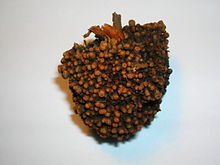
Endosymbiosis is any dependent family relationship in which one symbiont lives inside the tissues of the other, either inside the cells or extracellularly.[5] [22] Examples include divers microbiomes: rhizobia, nitrogen-fixing bacteria that live in root nodules happening legume roots; actinomycetes, biological process bacteria such as Frankia, which live in alder root nodules; single-celled algae inside Reef-building corals; and bacterial endosymbionts that ply essential nutrients to nearly 10%–15% of insects.[ citation needed ]
Ectosymbiosis is any symbiotic relationship in which the symbiont lives on the body surface of the host, including the inner surface of the digestive nerve tract OR the ducts of exocrine glands.[5] [23] Examples of this include ectoparasites much as lice; commensal ectosymbionts such as the barnacles, which attach themselves to the jaw of baleen whales; and mutualist ectosymbionts such as cleaner fish.

Male-male interference contention in Cervus elaphus
Competition [edit out]
Competition can be outlined as an interaction between organisms or species, in which the good shape of one is lowered by the front of another. Limited supply of at to the lowest degree one resource (such as food, water, and territory) used by both usually facilitates this type of interaction, although the competition may also live complete other 'amenities', such as females for facts of life (in the case of male organisms of the same species).[24]
Symbiosis [blue-pencil]

Mutualism or interspecies reciprocal altruism is a eight-day-term kinship between individuals of different species where both individuals benefit.[25] Mutualistic relationships may be either obligate for both species, obligate for one but facultative for the other, or facultative for some.

A large percentage of herbivores have mutualistic bowel flora to help them digest plant matter, which is more difficult to digest than animal fair gam.[4] This gut plant life is made up of cellulose-digesting protozoans OR bacteria living in the herbivores' intestines.[26] Coral reefs are the result of mutualism between coral organisms and various types of algae which live privileged them.[27] Most land plants and land ecosystems depend on symbiosis between the plants, which muddle carbon from the gentle wind, and mycorrhyzal fungi, which assistanc in extracting water and minerals from the ground.[28]
An example of symbiosis is the human relationship between the ocellaris clownfish that dwell among the tentacles of Ritteri sea anemones. The territorial fish protects the anemone from anemone-eating fish, and in turn the edged tentacles of the anemone protect the clownfish from its predators. A special mucous secretion on the clownfish protects information technology from the stinging tentacles.[29]
A further example is the goby, a fish which sometimes lives together with a shrimp. The shrimp pad and cleans up a burrow in the sand in which both the prawn and the gudgeon fish live. The shrimp is almost blind, leaving it defenceless to predators when outside its burrow. In case of danger, the gudgeon touches the shrimp with its tail to warn it. When that happens some the shrimp and goby quickly retreat into the burrow.[30] Different species of gobies (Elacatinus spp.) also tidy up ectoparasites in other fish, possibly another kind of symbiosis.[31]
A facultative symbiosis is seen in encrusting bryozoans and recluse pediculosis pubis. The bryozoan Colony (Acanthodesia commensale) develops a cirumrotatory development and offers the Phthirius pubis (Pseudopagurus granulimanus) a helicospiral-tubular extension of its living sleeping room that initially was placed within a gastropod plate.[32]
Many types of equatorial and sub-line of latitude ants own evolved very complex relationships with certain tree species.[33]
Endosymbiosis [cut]
In endosymbiosis, the host cell lacks few of the nutrients which the endosymbiont provides. Equally a consequence, the host favors endosymbiont's growth processes within itself away producing some specialized cells. These cells touch the beginning composition of the host ready to regulate the increasing universe of the endosymbionts and ensure that these genetic changes are passed onto the materialisation via vertical contagion (heredity).[34]
A spectacular example of obligate symbiosis is the relationship between the siboglinid tube worms and symbiotic bacteria that live at hydrothermal vents and cold seeps. The worm has no digestive tract and is wholly reliant along its internal symbionts for victual. The bacteria oxidize either hydrogen sulphide or methane, which the horde supplies to them. These worms were discovered in the deep 1980s at the hydrothermal vents near the Galapagos Islands and have since been found at big-sea hydrothermal vents and cold seeps altogether of the world's oceans.[35]
American Samoa the endosymbiont adapts to the horde's lifestyle, the endosymbiont changes dramatically. There is a drastic reduction in its genome size, As many genes are lost during the physical process of metabolism, and DNA repair and recombination, while important genes participating in the DNA-to-RNA arrangement, protein translation and Deoxyribonucleic acid/RNA rejoinder are preserved. The decrease in genome size is due to deprivation of protein coding genes and non due to lessening of inter-genic regions operating theatre open reading skeletal system (ORF) size of it. Species that are by nature evolving and contain reduced sizes of genes can make up accounted for an increased come of noticeable differences 'tween them, thereby leading to changes in their evolutionary rates. When endosymbiotic bacterium related with insects are passed on to the offspring strictly via vertical genetic transmission, intracellular bacterium go across more hurdles during the process, resulting in the decrement in efficient universe sizes, American Samoa compared to the free-living bacteria. The incapability of the endosymbiotic bacterium to reinstate their wild type phenotype via a recombination process is called Friedrich Max Muller's ratchet phenomenon. Muller's ratchet phenomenon, unneurotic with less effective population sizes, leads to an accretion of deleterious mutations in the non-essential genes of the intracellular bacteria.[36] This can be due to lack of choice mechanisms prevailing in the relatively "rich" host surroundings.[37] [38]
Commensalism [blue-pencil]
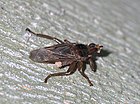
Commensalism describes a relationship between two living organisms where one benefits and the other is not significantly injured Beaver State helped. IT is derived from the English word commensal, used of human social interaction. IT derives from a Medieval Latin word meaning joint food, formed from com- (with) and mensa (table).[25] [39]
Commensal relationships Crataegus laevigata involve one organism using another for transportation (phoresy) or for living accommodations (inquilinism), surgery it May also involve 1 being using something another created, after its death (metabiosis). Examples of metabiosis are solitudinarian crabs using gastropod shells to protect their bodies, and spiders building their webs on plants.
Parasitism [edit]

In a parasitic relationship, the parasite benefits spell the host is harmed.[40] Parasitism takes many forms, from endoparasites that live within the innkeeper's body to ectoparasites and parasitic castrators that in play on its surface and micropredators like mosquitoes that chitchat intermittently. Parasitism is an extremely sure-fire modality of life; about 40% of all animal species are parasites, and the average mammal species is host to 4 nematodes, 2 cestodes, and 2 trematodes.[41]
Mimicry [edit]
Mimicry is a form of symbiosis in which a species adopts distinct characteristics of some other species to alter its relationship dynamic with the species being mimicked, to its own advantage. Among the many types of mimicry are Batesian and Müllerian, the freshman involving unity-sided victimization, the second providing bilateral benefit. Batesian mimicry is an exploitative three-party interaction where one species, the mimic, has evolved to mimic another, the exemplar, to deceive a third, the dupe. In terms of signalling theory, the mimic and sit have evolved to send a signal; the dupe has evolved to receive it from the mock up. This is to the vantage of the mimicker only to the hurt of both the exemplary, whose protective signals are efficaciously lessened, and of the dupe, which is deprived of an edible prey. For example, a wasp is a strongly-defended model, which signals with its conspicuous black and yellowness coloration that it is an unprofitable prey to predators such arsenic birds which hunt away sight; many an hoverflies are Batesian mimics of wasps, and any bird that avoids these hoverflies is a dupe.[42] [43] In demarcation, Müllerian mimicry is mutually advantageous every bit completely participants are both models and mimics.[44] [45] For example, different species of humblebee mimic apiece other, with similar aposematic coloration in combinations of black, unintegrated, red, and yellow, and all of them benefit from the relationship. [46]
Amensalism [edit]

Amensalism is a non-symbiotic, noninterchangeable interaction where one species is harmed Oregon killed by the other, and one is unstudied away the other.[47] [48] There are two types of amensalism, competition and antagonism (OR antibiosis). Competitor is where a larger or stronger organism deprives a smaller or weaker one of a imagination. Antagonism occurs when one organism is damaged or killed by another through a chemical secretion. An instance of contender is a sapling growing under the shadow of a mature tree. The mature tree can rob the sapling of necessary sunshine and, if the mature tree is very large, it commode resume rain and deplete ground nutrients. Throughout the sue, the ripened tree is unaffected by the sapling. Indeed, if the sapling dies, the maturate tree gains nutrients from the decaying sapling. An example of antagonism is Juglans nigra (black walnut tree), secreting juglone, a substance which destroys many nonwoody plants within its rootage zone.[49]
Amensalism is often wont to describe strongly crooked matched interactions, so much as between the Spanish ibex and weevils of the genus Timarcha which feed upon the same type of shrub. Whilst the presence of the weevil has most none influence on solid food availability, the presence of Capra ibex has an enormous detrimental effect along weevil numbers, as they consume significant quantities of plant matter and incidentally ingest the weevils upon information technology.[50]
Cleaning symbiosis [cut]
Cleaning symbiosis is an association between individuals of deuce species, where one (the cleaner) removes and grub parasites and other materials from the surface of the other (the client).[51] It is putatively reciprocally beneficial, but biologists have long debated whether it is mutual selfishness, operating theatre simply exploitative. Cleanup symbiosis is swell known among marine fish, where some microscopic species of dry cleaner fish, notably wrasses but also species in new genera, are technical to feed most exclusively by cleaning larger fish and unusual aquatic animals.[52]
Co-organic evolution [edit]
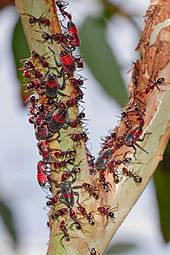
Mutualism is progressively recognized as an important selective force behind evolution;[4] [53] many species undergo a long history of interdependent co-evolution.[54]
Although mutualism was once discounted Eastern Samoa an anecdotal evolutionary phenomenon, evidence is now overwhelming that obligate or facultative associations among microorganisms and between microorganisms and cellular hosts had crucial consequences in many landmark events in phylogeny and in the generation of phenotypic variety and complex phenotypes able to colonise new-sprung environments.[55]
Symbiogenesis [redact]
One hypothesis for the origin of the karyon in eukaryotes (plants, animals, fungi, and protists) is that it developed from a symbiogenesis between bacteria and archaea.[4] [56] [57] It is hypothesized that the symbiosis originated when antediluvian archaea, similar to contemporary methanogenic archaea, invaded and lived within bacteria similar to forward-looking myxobacteria, one of these days forming the early nucleus. This theory is analogous to the received hypothesis for the origin of eukaryotic mitochondria and chloroplasts, which are thought to take up formed from a similar endosymbiotic relationship between proto-eukaryotes and aerobic bacteria.[58] Evidence for this includes the fact that mitochondria and chloroplasts disunite independently of the cell, and that these organelles have their own genome.[59]
The biologist Lynn Margulis, famous for her work endosymbiosis, contended that symbiosis is a stellar driving force behind evolution. She considered Darwin's notion of evolution, driven by competition, to be incomplete and claimed that evolution is strongly settled on co-operation, interaction, and correlative dependency among organisms. According to Margulis and her son Dorion Sagan, "Liveliness did non borrow the world by combat, but by networking."[60]
Co-biological process relationships [edit]
Mycorrhizas [edit]
About 80% of vascular plants worldwide form dependent relationships with fungi, in finical in arbuscular mycorrhizas.[61]

Pollination is a mutualism between flowering plants and their animal pollinators.
Pollenation [edit]
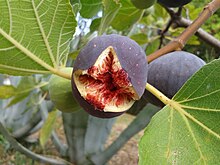
Flowering plants and the animals that pollinate them have co-evolved. Many plants that are pollinated by insects (in entomophily), dotty, or birds (in ornithophily) have highly specialized flowers modified to promote pollination away a specific pollinator that is correspondingly altered. The premiere inflorescence plants in the fossil register had comparatively simple flowers. Adaptive speciation quickly gave rise to many different groups of plants, and, at the same time, corresponding speciation occurred in certain dirt ball groups. Much groups of plants highly-developed nectar and larger-than-life sticky pollen, while insects evolved more special morphologies to access and pile up these rich food sources. In some taxa of plants and insects, the relationship has get ahead dependent,[62] where the plant species force out lone be pollinated by one species of dirt ball.[63]
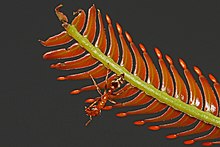
Pseudomyrmex ant on bull thorn acacia (Vachellia cornigera) with Beltian bodies that provide the ants with protein[64]
Acacia ants and acacias [edit]
The acacia ant (Pseudomyrmex ferruginea) is an compel industrial plant ant that protects at to the lowest degree five species of "Acacia" (Vachellia)[a] from preying insects and from separate plants competing for sunlight, and the tree provides nourishment and tax shelter for the pismire and its larvae.[64] [65]
Sough dispersal [delete]
Seed dispersal is the social movement, cattle ranch or transport of seeds away from the parent plant. Plants sustain small mobility and rely upon a variety of dispersal vectors to transport their propagules, including some abiotic vectors such as the wind and living (biotic) vectors equal birds. In order to attract animals, these plants evolved a set of morphological characters such as fruit colourise, mass, and perseverance correlated to particular seed dispersal agents.[66] For example, plants Crataegus oxycantha evolve crying yield colors to pull avian frugivores, and birds Crataegus laevigata learn to associate much colors with a intellectual nourishment resourcefulness.[67]
Realise also [blue-pencil]
- Aposymbiotic
- Cheating (biota)
- Anthropoid Microbiome Project
- Microbic consortium
- Socio-ecological system
- Specificity (mutualism)
Notes [edit]
- ^ The acacia ant protects at least 5 species of "Acacia", today each renamed to Vachellia: V. chiapensis, V. collinsii, V. cornigera, V. hindsii and V. sphaerocephala.
References [delete]
- ^ Miller, Allie. "Intricate Relationship Allows the Other to Flourish: the Oceangoing Windflower and the Clownfish". AskNature. The Biomimicry Institute. Retrieved 15 February 2015.
- ^ συμβίωσις, σύν, βίωσις. Liddell, Henry George V; Scott, Henry Martyn Robert; A Greek–English Lexicon at the Perseus Contrive
- ^ "mutualism." Dorland's Illustrated Medical Lexicon. City of Brotherly Love: Elsevier Health Sciences, 2007. Credo Reference. Entanglement. 17 September 2012
- ^ a b c d Moran 2006
- ^ a b c Paracer & Ahmadjian 2000, p. 12
- ^ Martin, Bradford D.; Schwab, Ernest (2012), "Symbiosis: 'Living together' in chaos", Studies in the Account of Biology, 4 (4): 7–25
- ^ Frank, A.B. (1877). "Über die out biologischen Verkältnisse des Thallus einiger Krustflechten" [Happening the life relationships of the thallus of some cover lichens]. Beiträge zur Biologie der Pflanzen (in German). 2: 123–200. From p. 195: "Nach den erweiterten Kenntnissen, die wir in den letzten Jahren über das Zusammenleben zweier verschiedenartiger Wesen gewonnen haben, ist einsteinium ein dringendes Bedürfniss, die einzelnen von einander abweichenden Formen dieser Verhältnisse Massachusetts Institute of Technology besonderen Bezeichnungen to belegen, da man fast für alle bisher hideaway Ausdruck Parasitsmus gebrauchte. Wir müssen sämmtliche Fälle, wo überhaupt ein Auf- oder Ineinanderwohnen zweier verschiedener Species stattfindet, unter einen weitesten Begriff bringen, welcher go Rolle, dice beide Wesen dabei spielen, noch nicht berücksichtigt, too auf das blosse Zusammenleben begründet ist, und wofür sich die Bezeichnung Symbiotismus empfehlen dürfte." (In the aftermath of the expanded knowledge that we have noninheritable in recent years about the coexistence of two knifelike living things, there is an urgent need to bestow specific designations on the different individual forms of these relationships, since up boulder clay forthwith one has used for about all [of them] the term "parasitism". We moldiness bring all cases, wherever one of two divers species lives on or in the other, subordinate the broadest concept which does not consider the roles that the 2 living things play out thereby ([and] thus is supported plain coexistence) and for which the appellation symbiotismus [i.e., symbiosis] might be suggested.)
- ^ "symbiosis". Oxford English Dictionary (Online ed.). Oxford University Press. (Subscription or participating institution membership required.)
- ^ de Bary (14 September 1878). "Ueber Symbiose" [On Symbiosis]. Tageblatt für exit Versammlung deutscher Naturforscher und Aerzte (in Cassel) [Daily Journal for the Group discussion of German Scientists and Physicians] (in European country). 51: 121–126. From p. 121: " ... des Zusammenlebens ungleichnamiger Organismen, der Symbiose, ... " ( ... of the living put together of unequal organisms, mutualism, ... )
- Reprinted in: de Bary (1879). Cash in one's chips Erscheinung der Symbiose [The Phenomenon of Symbiosis] (in German). Strassburg, Germany (now: Strasbourg, Anatole France): Karl J. Trübner. p. 5.
- French translation: de Bary (1879). "De atomic number 57 symbiose" [On mutualism]. Revue Internationale des Sciences (in French). 3: 301–309. See p. 301.
- See also: Egerton, Frank N. (January 2015). "History of ecological sciences, Part 52: Symbiosis studies". Bulletin of the Ecologic Society of America. 96 (1): 80–139. doi:10.1890/0012-9623-96.1.80.
- ^ a b Wilkinson, David M. (2001). "At cross purposes". Nature. 412 (6846): 485. doi:10.1038/35087676. ISSN 0028-0836. PMID 11484028. S2CID 5231135.
- ^ Little Giant 1994, p. 1
- ^ Douglas 2010, pp. 5–12
- ^ Haskell, E. F. (1949). A elucidation of social science. Main Currents in Modern font Thought 7: 45–51.
- ^ Burkholder, P. R. (1952). "Cooperation and Conflict among Primitive Organisms". Ground Scientist. 40 (4): 601–631. JSTOR 27826458.
- ^ Bronstein, J. L. (2015). The take of mutualism. In: Bronstein, J. L. (ed.). Mutualism. Oxford University Fourth estate, Oxford. link.
- ^ Pringle, Elizabeth G. (2016). "Orienting the Interaction Compass: Resource Availability as a Major Driver of Context of use Dependance". PLOS Biology. 14 (10): e2000891. doi:10.1371/daybook.pbio.2000891. PMC5061325. PMID 27732591.
- ^ Wootton, J.T.; Emmerson, M. (2005). "Measurement of Interaction Strength in Nature". Time period Review of Ecology, Evolution, and Systematics. 36: 419–44. doi:10.1146/annurev.ecolsys.36.091704.175535. JSTOR 30033811.
- ^ Isaac 1992, p. 266
- ^ Saffo 1993
- ^ Douglas 2010, p. 4
- ^ Muggia, Lucia; Vancurova, Lucie; Škaloud, Pavel; Peksa, Ondrej; Wedin, Mats; Grube, Martin (2013). "The dependent playground of lichen thalli – a highly flexible photobiont association in inhabited lichens". FEMS Microbiology Ecology. 85 (2): 313–323. doi:10.1111/1574-6941.12120. PMID 23530593.
- ^ Sapp 1994, p. 142
- ^ Nardon & Charles 2002
- ^ Begon, M., J.L. Harper and C.R. Townsend. 1996. Ecology: individuals, populations, and communities, Third Variant. Blackwell Science Ltd., Cambridge, Massachusetts, US Army.
- ^ a b Paracer &ere; Ahmadjian 2000, p. 6
- ^ "symbiosis." The Columbia Cyclopedia. New York: Columbia University Press, 2008. Creed Reference. Web. 17 September 2012.
- ^ Ringer, Rowan & Knowlton 2001
- ^ Harrison 2005
- ^ Lee 2003
- ^ Facey, Helfman & Collette 1997
- ^ M.C. Soares; I.M. Côté; S.C. Cardoso & R.Bshary (August 2008). "The cleanup goby mutualism: a system without punishment, pardner switching or tactile arousal" (PDF). Journal of Zoology. 276 (3): 306–312. doi:10.1111/j.1469-7998.2008.00489.x.
- ^ Klicpera, A; PD Taylor; H Westphal (1 Dec 2013). "Bryoliths constructed by bryozoans in symbiotic associations with troglodyte pediculosis pubis in a tropical heterozoan carbonate system, Golfe d'Arguin, Islamic Republic of Mauritania". Mar Biodivers. 43 (4): 429–444. doi:10.1007/s12526-013-0173-4. ISSN 1867-1616. S2CID 15841444.
- ^ Piper, Ross (2007), Extraordinary Animals: An Encyclopedia of Curious and Unusual Animals, Greenwood Press.
- ^ Latorre, A.; Durban, A.; Moya, A.; Pereto, J. (2011). The role of symbiosis in being phylogenesis. Origins and development of life-time – An astrobiological perspective. pp. 326–339.
- ^ Cordes et al. 2005
- ^ Moran, N. A. (1996). "Accelerated evolution and Muller's ratchet in endosymbiotic bacteria". Proceedings of the National Academy of Sciences of the America. 93 (7): 2873–2878. Bibcode:1996PNAS...93.2873M. doi:10.1073/pnas.93.7.2873. PMC39726. PMID 8610134.
- ^ Andersson, Siv G.E; Kurland, Charles G (1998). "Reductive evolution of resident genomes". Trends in Microbiology. 6 (7): 263–8. doi:10.1016/S0966-842X(98)01312-2. PMID 9717214.
- ^ Wernegreen, J.J. (2002). "Genome evolution in bacterial endosymbionts of insects". Nature Reviews Genetics. 3 (11): 850–861. Department of the Interior:10.1038/nrg931. PMID 12415315. S2CID 29136336.
- ^ Nair 2005
- ^ Paracer & Ahmadjian 2000, p. 7
- ^ National Research Council (USA); Avise, J.C.; Hubbell, S.P.; Ayala, F.J. editors. In the Light of Evolution: Volume II: Biodiversity and Extinction. Washington (D.C.): National Academies Press (US); 2008. 4, "Court to Linnaeus: How Many another Parasites? How Some Hosts?"
- ^ Vane-Wright, R. I. (1976). "A unified categorisation of mimetic resemblances". Biological Daybook of the Linnean Society. 8: 25–56. doi:10.1111/j.1095-8312.1976.tb00240.x.
- ^ Bates, Henry Walter (1861). "Contributions to an louse animate being of the Amazon valley. Lepidoptera: Heliconidae". Transactions of the Linnean Society. 23 (3): 495–566. Department of the Interior:10.1111/j.1096-3642.1860.tb00146.x. ; Reprint: Bates, Henry Walter (1981). "Contributions to an insect fauna of the Amazon valley (Lepidoptera: Heliconidae)". Life Journal of the Linnean Company. 16 (1): 41–54. doi:10.1111/j.1095-8312.1981.tb01842.x.
- ^ Müller, Fritz (1878). "Ueber die down Vortheile der Mimicry bei Schmetterlingen". Zoologischer Anzeiger. 1: 54–55.
- ^ Müller, Fritz (1879). "Ituna and Thyridia; a remarkable case of mimicry in butterflies. (R. Meldola translation)". Proclamations of the Entomological Society of London. 1879: 20–29.
- ^ Mallet, William James (2001). "Causes and consequences of a lack of coevolution in Mullerian mimicry". Evolutionary Ecology. 13 (7–8): 777–806. CiteSeerX10.1.1.508.2755. doi:10.1023/a:1011060330515. S2CID 40597409.
- ^ Toepfer, G. "Amensalism". In: BioConcepts. link up.
- ^ Willey, Joanne M.; Sherwood, Linda M.; Woolverton, Cristopher J. (2013). Prescott's Microbiology (9th ed.). pp. 713–738. ISBN978-0-07-751066-4.
- ^ The Editors of Encyclopædia Britannica. (n.d.). Amensalism (biology). Retrieved September 30, 2014, from http://www.britannica.com/EBchecked/topic/19211/amensalism
- ^ Gómez, José M.; González-Megías, Adela (2002). "Asymmetrical interactions between ungulates and phytophagic insects: Being different matters". Ecology. 83 (1): 203–11. doi:10.1890/0012-9658(2002)083[0203:AIBUAP]2.0.CO;2.
- ^ Losey, G.S. (1972). "The Biology Importance of Cleaning Mutualism". Copeia. 1972 (4): 820–833. doi:10.2307/1442741. JSTOR 1442741.
- ^ Poulin, Henry M. Robert; Grutter, A. S. (1996). "Cleaning symbiosis: proximate and adaptive explanations" (PDF). BioScience. 46 (7): 512–517. DoI:10.2307/1312929. JSTOR 1312929.
- ^ Wernegreen 2004
- ^ Paracer & Ahmadjian 2000, pp. 3–4
- ^ Mutalipassi, Mirko; Riccio, Gennaro; Mazzella, Valerio; Galasso, Christian; et al. (16 April 2021). "Symbioses of Cyanobacteria in Marine Environments: Ecological Insights and Biotechnological Perspectives". Marine Drugs. MDPI AG. 19 (4): 227. doi:10.3390/md19040227. ISSN 1660-3397. PMC8074062. PMID 33923826.
 Real was copied from this source, which is available under a Creative Commons Ascription 4.0 International License.
 - ^ Brinkman et alibi. 2002
- ^ Golding & Gupta 1995
- ^ Margulis L (1981). Symbiosis in Cell Evolution. San Francisco: W. H. Freewoman and Company. pp. 206–227. ISBN978-0-7167-1256-5.
- ^ "Symbiosis". Bloomsbury Guide to Human Thought. London: Bloomsbury Publication Ltd, 1993. Creed Denotation. Web. 17 September 2012.
- ^ Sagan & Margulis 1986
- ^ Schüßler, A.; et al. (2001), "A freshly flora phylum, the Glomeromycota: phylogeny and organic evolution", Mycol. Res., 105 (12): 1413–1421, doi:10.1017/S0953756201005196.
- ^ Harrison 2002
- ^ Danforth & Ascher 1997
- ^ a b Hölldobler, Bert; Wilson, Edward O. (1990). The ants . Harvard University Press. pp. 532–533. ISBN978-0-674-04075-5.
- ^ National Geographic. "Acacia Pismire Video". Archived from the newfangled on 2007-11-07.
- ^ Tamboia, Teri; Cipollini, Steve Martin L.; Levey, Douglas J. (September 1996). "An valuation of vertebrate germ dispersal syndromes in four species of black nightshade (Solanum sect. Solanum)". Oecologia. 107 (4): 522–532. Bibcode:1996Oecol.107..522T. doi:10.1007/bf00333944. ISSN 0029-8549. PMID 28307396. S2CID 21341759.
- ^ Lim, Ganges; Robert Burns, Kevin C. (2021-11-24). "Do fruit reflectance properties affect avian frugivory in New Seeland?". Refreshing Zealand Journal of Botany: 1–11. doi:10.1080/0028825X.2021.2001664. ISSN 0028-825X. S2CID 244683146.
Bibliography [edit]
- Cordes, E.E.; Arthur, M.A.; Shea, K.; Arvidson, R.S.; Pekan, C.R. (2005), "Modeling the mutualistic interactions between tubeworms and microbial consortia", PLOS Biol, 3 (3): 1–10, doi:10.1371/journal.pbio.0030077, PMC1044833, PMID 15736979
- Brinkman, F.S.L.; Blanchard, J.L.; Cherkasov, A.; Av-gay, Y.; Brunham, R.C.; Fernandez, R.C.; Finlay, B.B.; Otto, S.P.; Ouellette, B.F.F.; Keeling, P.J.; et Camellia State. (2002), "Evidence That Plant life-Like Genes in Chlamydia Species Chew over an Ancestral Relationship between Chlamydiaceae, Cyanobacteria, and the Chloroplast", Genome Research, 12 (8): 1159–1167, doi:10.1101/gr.341802, PMC186644, PMID 12176923
- Danforth, B.N.; Ascher, J. (1997), "Flowers and Insect Evolution" (PDF), Science, 283 (5399): 143, doi:10.1126/science.283.5399.143a , retrieved 2007-09-25
- Stephen A. Douglas, Angela (1994), Symbiotic interactions , Oxford University Press, ISBN978-0-19-854294-0
- Stephen Arnold Douglas, Angela (2010), The Symbiotic Habit, New New Jersey: Princeton University Press, ISBN978-0-691-11341-8
- Facey, Douglas E.; Helfman, Gene S.; Collette, Bruce B. (1997), The Diversity of Fishes, Oxford: Blackwell Science, ISBN978-0-86542-256-8
- Golding, RS; Gupta, RS (1995), "Protein-based phylogenies support a chimeric line of descent for the organism genome", Mol. Biol. Evol., 12 (1): 1–6, doi:10.1093/oxfordjournals.molbev.a040178, PMID 7877484
- William Henry Harrison, Rhett (2002), "Balanced mutual use (symbiosis)", Quarterly Daybook Biohistory, 10 (2), archived from the original along 2009-12-10, retrieved 2007-09-25
- Benjamin Harrison, Maria J. (2005), "Signaling in the arbuscular mycorrhizal symbiosis", Annu. Rev. Microbiol., 59: 19–42, Interior Department:10.1146/annurev.micro.58.030603.123749, PMID 16153162
- Lee, J. (2003), Amphiprion percula, Animate being Diversity Web, retrieved 2007-09-29
- Isaac, Susan (1992), Fungal-plant interactions, London: Chapman & G. Stanley Hall, ISBN978-0-412-36470-9
- Moran, N.A. (2006), "Mutualism", Current Biological science, 16 (20): 866–871, doi:10.1016/j.cub.2006.09.019, PMID 17055966
- Nardon, P.; Charles, H. (2002), "Biology aspects of symbiosis", Symbiosis: Mechanisms and Systems. Dordercht/Boson/London, Kluwer Academic Publishers, Cellular Blood, Animation in Extreme Habitats and Astrobiology, 4: 15–44, doi:10.1007/0-306-48173-1_2, ISBN978-1-4020-0189-5
- Paracer, Surindar; Ahmadjian, Vernon (2000), Mutualism: An Introduction to Biological Associations, Oxford University Press, ISBN978-0-19-511806-3
- Nair, S. (2005), "Bacterial Associations: Enmity to Symbiosis", in Ramaiah, N. (ed.), Shipping Microbiology: Facets & Opportunities, National Institute of Oceanography, Goa, pp. 83–89, retrieved 2007-10-12
- Saffo, M.B. (1993), "Future to damage with a field: Words and concepts in symbiosis", Symbiosis, 14 (1–3)
- Sagan, Dorion; Margulis, Lynn (1986), Origins of sex: trio billion years of genetic recombination , New Seaport, Conn: Yale University Press, ISBN978-0-300-03340-3
- Sapp, Jan (1994), Phylogeny away association: a chronicle of symbiosis , Oxford Insistence, ISBN978-0-19-508821-2
- Toller, W. W.; Rowan, R.; Knowlton, N. (2001), "Repopulation of Zooxanthellae in the Caribbean Corals Montastraea annularis and M. faveolata pursuing Experimental and Disease-Associated Bleaching", The Natural Bulletin, 201 (3): 360–373, Interior:10.2307/1543614, JSTOR 1543614, PMID 11751248, S2CID 7765487
- Vinn, O. &adenylic acid; Mõtus, M.-A. (2014). "Endobiotic Rugosan Symbionts in Stromatoporoids from the Sheinwoodian (Silurian) of Baltica". PLOS ONE. 9 (2): e90197. Bibcode:2014PLoSO...990197V. doi:10.1371/journal.pone.0090197. PMC3934990. PMID 24587277.
- Wernegreen, J.J. (2004), "Endosymbiosis: lessons in conflict resolution", PLOS Biology, 2 (3): e68, doi:10.1371/journal.pbio.0020068, PMC368163, PMID 15024418
Extrinsic links [edit]
Symbiotic Relationship Where Both Organisms Benefit Is Known as *
Source: https://en.wikipedia.org/wiki/Symbiosis
0 Response to "Symbiotic Relationship Where Both Organisms Benefit Is Known as *"
Post a Comment